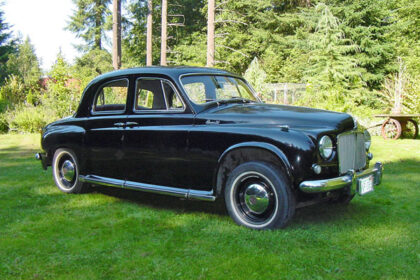
ROVER P4

Rover’s Managing Director in the 1930s, Spencer Wilks, was determined to produce cars of high quality and refinement with a measure of dignity. He had no interest in building high performance vehicles. For some years prior to the arrival of Wilks, Rover’s approach to building cars had been along these same lines and Wilks ensured that they continued in this manner. The P4 was part of a design philosophy commenced by Wilks’ predecessors but it had a more modern look and also incorporated mechanical improvements developed by Rover engineers. The… Read more
NSU Ro80

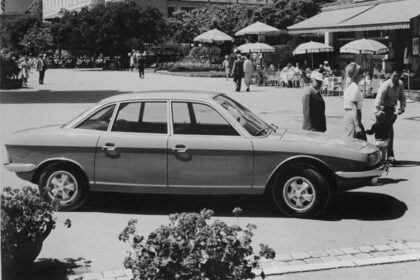
In many ways the Ro80 was to the sixties what the Citroen Goddess was to the fifties. The Ro80 was recognised as a futuristic design when it greeted the public light of day at the end of 1967. The NSU was regarded as revolutionary more for its use of the Wankel twin rotor engine than for any other single attribute. Soon, argued the critics, maybe all cars will have rotary engines. There are just these few little teething troubles to fix … NSU had been proud of its decision to… Read more

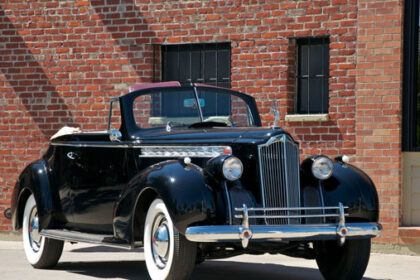
PACKARD 120

By 1939, the Americans had finally caught up with the European car design approach where unitary construction had become an acceptable form of construction and diversity in coachwork soon began to appear. Packard’s 120 Convertible was one such example. They started off by using a conservative approach to styling, including the side mounted spare wheel, and so the car’s overall appearance was more appealing than that of its competitors such as Buick and Cadillac. By using the same body parts for both their Super-Eight with a nine-bearing motor and the… Read more

PONTIAC FIREBIRD

1972 Pontiac Firebird Formula In 1967 General Motors, caught napping, finally produced its answer to the Ford Mustang. It was the F-body Camaro/Firebird. Although the Pontiac division wanted a car which aped the Chevrolet Corvette they were forced to accept a Comaro clone with a few cosmetic changes designed to give the car a somewhat distinctive appearance. It must have upset a number of Pontiac executives who felt that they, as creators of the Tempest and GTO, ought not to be following but leading in the performance car stakes. To… Read more

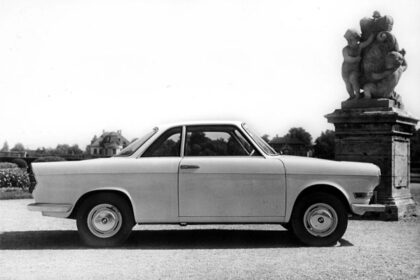
BMW 700

In 1957 BMW introduced the model 600 which was a four-seat alternative to the Isetta, a mini-car designed around a 247 cc BMW motorcycle engine. The 600 was a move in the direction of `real cars’ after Europe began to slowly return to normal following World War II when it became apparent that the market for semi-autos like the Isetta and Goggomobile was beginning to dry up. The 600 had a two-cylinder motorcycle engine and the first form of rear suspension with semi-trailing arms that became a normal engineering feature… Read more

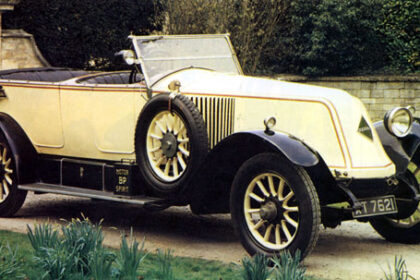
RENAULT 40CV

Also referred to as the model NN1, the Renault 40CV of 1924 was designed by Louis Renault and replaced the Renault types KJ and MT. It was powered by a large 9.1-litre straight-six engine mounted in the front of its extremely long chassis and it drove the rear wheels through a three-speed manual transmission. This engine developed 104 kW and drove the car to a top speed of 145 km/h. The NN1 was produced from 1924 through to 1928 as the successor to the Renault KJ and MT and it… Read more

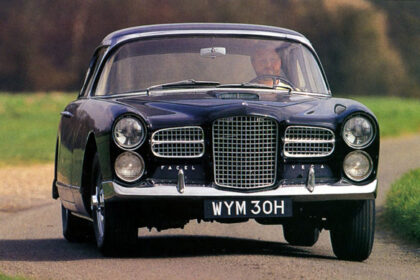
FACEL VEGA FACEL II

When race owners like Stirling Moss and Rob Walker gave the Facel Vega their stamp of approval many of the celebrities, royals and racing drivers of the 1960s lined up to buy them. This marque was an expensive car offering the comfort of a Rolls-Royce, the urge of a sportscar and the reliability and driving ease which had come to be associated with American cars. For the price, however, you could have bought a couple of E-type Jaguars along with a Lotus Elan. The Facel Vega, easily France’s most stylish… Read more

FORD LTD P6

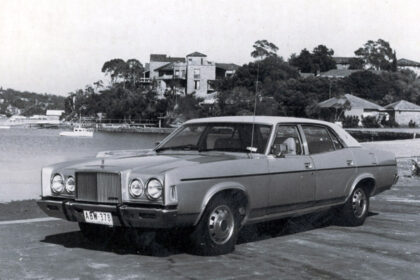
The Ford LTD was introduced in September 1976 intended as a rival to some of the prestigious brands from Britain and Europe. Unashamedly big its styling was clean and crisp in the American manner. The wheelbase was 3074mm, the longest of any modern passenger car in Australia. The engine continued to be the well proven 5.8-litre V8, designed to meet newly introduced emission controls. Transmission was the T-bar operated three-speed Cruisomatic and braking efficiency through the four-wheel discs was increased with the addition of a larger capacity booster. The Silver… Read more

RILEY BROOKLANDS

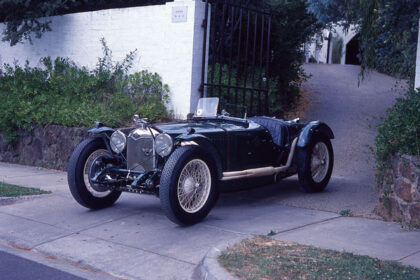
The Riley Brooklands was first introduced in mid-1927 and was produced from 1927 to 1932. It was powered by a front mounted four-cylinder 1087 cc overhead-valve engine which had part spherical combustion chambers driving the rear wheels. This engine was originally introduced in the Riley Nine family car in 1926 and its early performance indicated that it would make a good power source for a sports car. After some modifications, including the fitting of two horizontal SU carburettors, power output was raised to 37 kW at 5000 rpm, very high… Read more

MGB

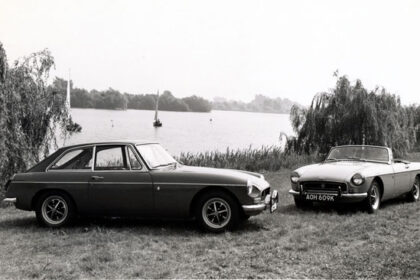
With sales of the Chinese-sourced MG models booming it’s a good opportunity to look back at the iconic British sportcars that established the marque, and in particular the most popular of all, the MGB. The MGB was significant mainly because it was the archetypal cheap sportscar, rapid without being really fast in standard form, simple to maintain, and endowed with enduring good looks. At first only a two-seater open sports version was available, but in 1965 the very elegant MGB GT hatchback derivative was released. It was unfortunate that the… Read more