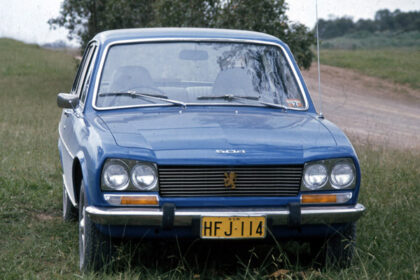
PEUGEOT 504

The first Peugeot family member mentioned in history was Jean-Jacques Peugeot (1699-1741). His two grandsons founded a steel foundry in France in 1810, which is still today supplying the steel used in Peugeot cars. As early as 1885 Armand Peugeot had built several bicycles and later designed a steam driven quadricycle. A little later on he built one of the first petrol-driven vehicles with a V-shaped twin cylinder engine producing 8 horsepower. In 1921 Peugeot introduced the 201, the first production car with independent front suspension. In fact, over the… Read more
FORD GT40

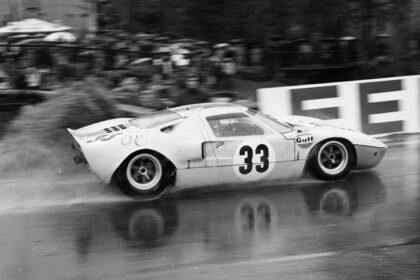
Early in the 1960s, Ford of Detroit committed themselves to an all-out campaign to achieve supremacy in motor sport. It was conceived as Ford’s ‘total performance’ marketing package in which the youth market had been identified as the fastest growing sector of demand. The object was to beat the rest of the world, Ferrari in particular, at Le Mans. Initially they tried, unsuccessfully as it turned out, to take over the Ferrari business. After this foundered, in 1963, they started a sports racing project of their own. The AC Cobra,… Read more

PORSCHE 356

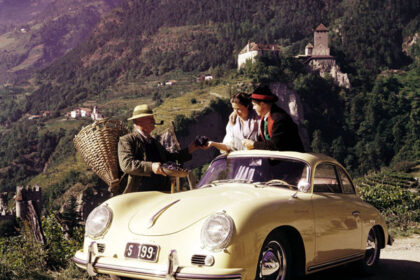
Dr Ferdinand Porsche’s first mass-produced car was the VW Beetle, and he used many of the design principles which made this car famous for the first production Porsche. At the end of World War II, Dr Porsche was imprisoned by the French for nearly two years but, despite being in poor health and over 70 years of age, he survived the ordeal and rejoined his family in Stuttgart. During his gaol term his son Ferry restarted the family business and built a prototype that would become the 356. The Porsche… Read more

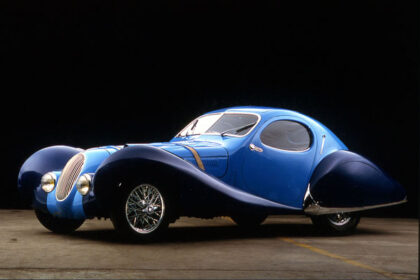
TALBOT-LAGO T-150

The STD company was a joint British-French automotive manufacturing company which produced Sunbeam, Talbot and Darracq cars between both the two World Wars, but which unfortunately failed in 1935. Following this Anthony Lago rescued the French Talbot section of the company and commenced production of Talbot-Lago cars carrying the Talbot badge at a plant in Seine, France. Incidentally it was at this time that that the Rootes group acquired the British interests including the Sunbeam and Darracq marques. Lago was a brilliant engineer and he immediately set about developing a… Read more

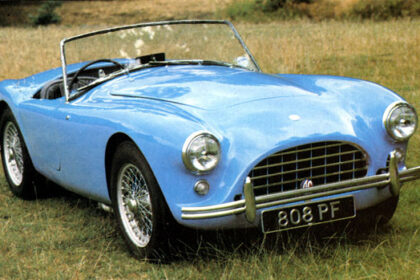
AC ACE

AC Cars re-entered the car market in 1947 with a rehash of the Thames Ditton, England pre-WW II model which was powered by a 2.0-litre overhead-cam straight-six engine. It was not, however, until 1953 when they released their new sports car that the company established its reputation as a sports car manufacturer. A design by John Tojeiro was selected which used a ladder-type tubular frame, all-independent transverse leaf-spring suspension and an extremely attractive open two-seater alloy body with classic lines. In appearance many people felt the design was inspired by… Read more

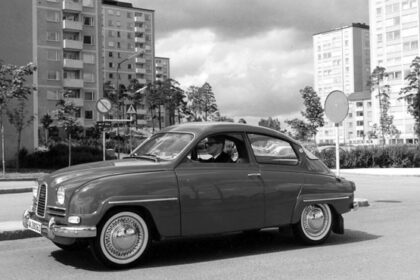
SAAB 96

The Saab 96 was introduced in 1960 but initially used the three-cylinder two-stroke engine from the model 93 which sold well in the late 1950s. The engine was inclined at an angle of 30 degrees to the left and positioned ahead of the front axle. The block and upper half of the crankcase were cast as an integral unit with the bottom half similarly of cast iron. The cylinder head, pistons and induction manifold were of light alloy. Right from its introduction Saab hoped to develop the two-stroke design even… Read more

OPEL KADETT

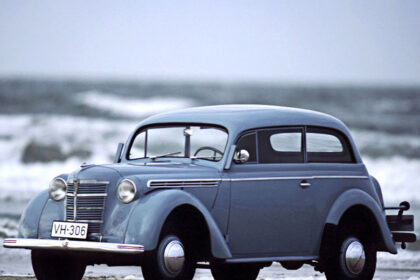
Opel cars were first made in Germany by Adam Opel GmbH, a German automobile company founded by Adam Opel in 1863. It became a subsidiary of General Motors (USA) in 1929 with GM holding an 80 per cent interest. General Motors was very impressed by Opel’s modern production facilities and in 1931 GM increased its ownership to 100 per cent. In 1935, Opel became the first German manufacturer to produce over 100,000 vehicles in a year. This was based on the popular Opel P4 model. Opel also produced he first… Read more

SAAB 99

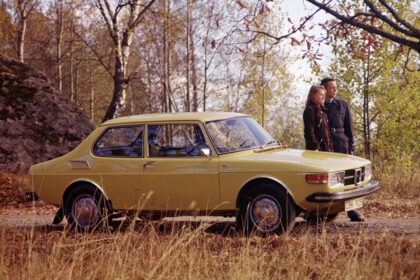
The Saab 99 became available to the public at the beginning of the European autumn in 1968, being introduced as the 1969 model. By then front-wheel drive was no longer as unique as it had been on the 92 in the late 1940s. Whereas only about 5 per cent of all cars in the world boasted the feature at that time, the figure had reached 20 per cent in 1969 and was rising steadily. Although compelled to abandon the two-stroke engine, Saab had never entertained any thought of forsaking the… Read more

VALIANT AP5

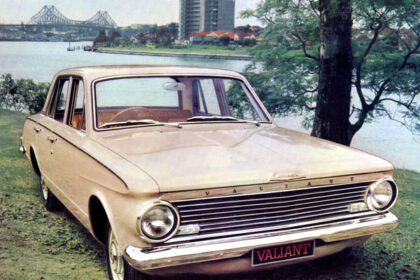
The introduction of the AP5 Valiant in May 1963 was timed perfectly with Chrysler’s strengthening presence in the Australian market. A few months before, the car maker had decided to take the plunge and started stamping panels and dies at a brand new plant in South Australia. By the time the AP5 arrived, it was no longer a case of local assembly. Chrysler was now building the cars and the level of American content had dropped dramatically. Chrysler’s investment in the Australian market was growing almost by the month. With… Read more

THE STRAIGHT-EIGHT LA SALLE

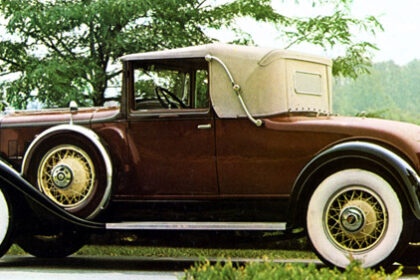
In the late 1920s wood was still a major component of car bodies, but in the 1930s pressed metal bodies became increasingly evident. In the United States body builders such as Briggs, Budd, Fisher and Murray were all busy turning out pressed car bodies and this construction method gave rise to the introduction of more stylish body styles. This general improvement in the appearance of automobiles had much to do with the integration of the stylist in the design departments. Stylists used a variety of features to set models apart…. Read more