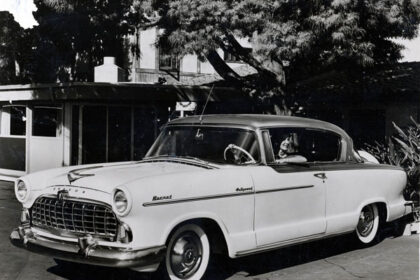
HUDSON HORNET

Hudson is another brand that is no longer produced. Although it started in 1909, by the early 1950s the brand had been acquired by Nash and went into limbo. If Hudson is to be remembered for anything it should be for their innovative engineers who were able to produce good designs with very limited budgets. In 1954 Hudson launched its Hornet which replaced the aged 1948 model that had proved unable to compete with the V8s from other manufacturers. Although the Hornet had only an L-section six-cylinder 5.0-litre engine which… Read more
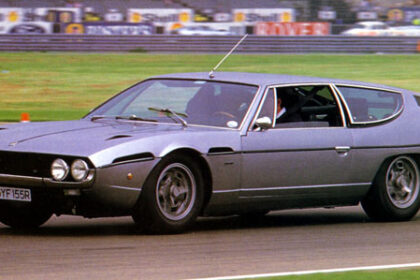
LAMBORGHINI ESPADA

Released in 1968, Espada was Lamborghini’s first four-seat vehicle and its biggest selling model for years. Encapsulating an exceptional approach to technical innovation, thanks to the front-mounted 4.0-litre Lamborghini V12 engine it was always an extremely fast grand tourer despite the step up in size. It could comfortably seat four adults and had more space for both luggage and passengers than the 400 GT 2+2 (its predecessor) and the Isler 400 GT 2+2. In addition, Espada featured truly outstanding finish, with generous amounts of leather and other refined materials, as… Read more

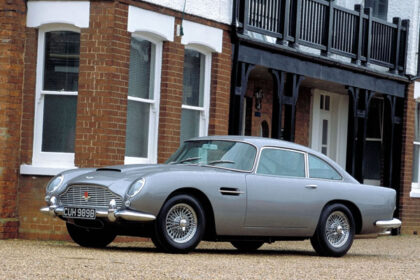
ASTON MARTIN DB5

The Aston Martin DB5 shot to fame as the car of secret service agent James Bond in the 1964 film Goldfinger. It is an icon, an enduring symbol of British prestige, whose importance to automotive history cannot be overstated. Of the 123 DB5 Convertibles built, just one was ordered and owned by Aston Martin Lagonda chairman Sir David Brown, who gave his initials to the car. Delivered to Sir David in January of 1964, the car was built to the highest spec, with a then-new five-speed ZF gearbox, a Power… Read more

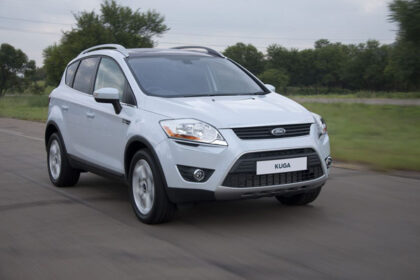
FORD KUGA 2012 – 2016

Like many SUVs these days Ford Kuga is aimed at those who have always loved Fords and are keen to have the advantage of a taller vehicle that can carry relatively bulky loads. And those who aren’t as young as they used to be will find it easier to get in and out of a vehicle with seats at hip height, rather than knee high. Many Kugas are two-wheel drive vehicles, others have all-wheel-drive and can be used to explore interesting bush tracks and fire trails. Ground clearance is generally… Read more

CHEVROLET IMPALA

The Chevrolet Impala was the perfect example of exuberance in the 1960s American car styling. In spite of its fins, chrome and mock elements, or perhaps because of them, the Impala achieved sales of almost half a million cars in 1960. Like other American car manufacturers, the Chevrolet division of General Motors offered buyers a large choice of engines, transmissions and body styles. Engine options ranged from a standard 3.8-litre straight six right up to a 5.7-litre Turbothrust V8. Power outputs of these options ranged from 172 kW at 4800… Read more

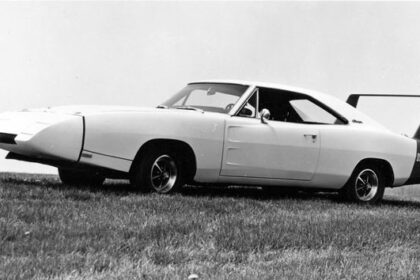
DODGE CHARGER DAYTONA

In 1968 Dodge introduced a new car, aimed at recapturing former glories at Daytona. It was built around the 6980cc 90-degree V8 hemi engine of the Charger and although the power output had to stay the same to comply with the rules there was some advantage to be gained from changing the bodywork. This was the time when automobile aerodynamics were first in vogue. For Dodge this meant a new plastic nosecone designed to conceal pop-up headlights and at the rear a really large spoiler. The spoiler was so large… Read more

BUICK ROADMASTER

Even though 1957 was the year that Buick celebrated the building of their nine-millionth car, sales were gradually slipping and the marque could only achieve fourth position in the industry sales chart. To rectify this situation the Buick division of General Motors expended considerable funds in improving Buick styling as it was considered ‘old fashioned’ when buyers compared their offerings with the opposition’s range. The Buick Roadmaster for 1957 was a large car – 5.46 metres long and 1.83 metres wide. It was powered by a 5.9-litre V8 engine with… Read more

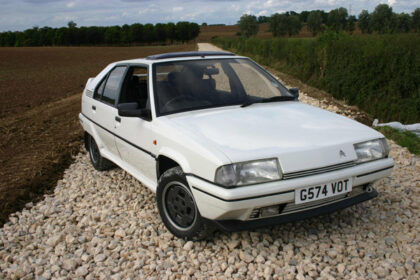
CITROEN BX

It has been said that the Citroen BX, first released at the 1982 Paris Motor Show, was the car that revived Citroen’s future. Citroen had been owned by the Michelin Tyre group since the early 1930s when Citroen had financial problems and in the mid-1970s the world oil crisis hit the car and component manufacturing industry heavily. As Citroen had spent heavily on new model development and production facility expansion they were very exposed to the downturn and once again drastic action was necessary. Between 1974 and 1976 financial restructuring… Read more

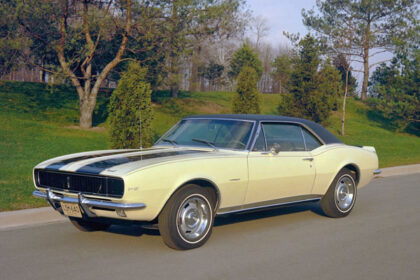
CHEVROLET CAMARO Z-28

General Motors often claim to be the first manufacturer of true post-war sports cars in the United States with the Corvette. Certainly, it was the first built in any volume but the newness of the concept to American car buyers took a while to catch on. Even though European sports cars were popular sellers at the time, the Corvette, when first released, was a flop. Despite this Ford followed quickly with its Thunderbird and using superior marketing skills, quickly outsold the Corvette two-to-one. Ford’s action took the industry by surprise… Read more

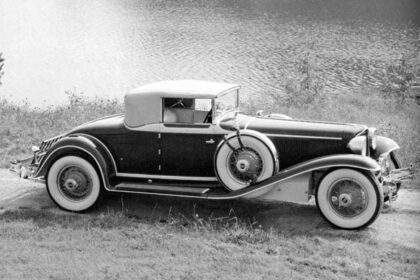
CORD L-29

Errett Lobban Cord’s life could have been very different: he nearly struck gold with his first motor car. It was called the L-29 because it made its debut in 1929 with power from Lycoming, the aero engine wing of the Auburn car manufacturing company which Cord owned. He had acquired the decaying Auburn company of Indiana, as well as the legendary Duesenberg high-performance car makers, as part of a financial package. Cord knew little about cars other than how to sell them. He was an outstanding salesman, perhaps one of… Read more