MAZDA RX-3

The RX3 is best viewed as an uprated, restyled R100. Its heart was still the 10A rotary, which drove back through a slick shifting all-synchro four-speed to a live rear axle suspended by leaf springs. To reduce its emission and noise levels, the RX3’s 10A differed somewhat from its predecessors. On smooth roads it could be coaxed around corners reasonably quickly, but as with its stablemates any kind of bumps threw the RX3 quickly off line. In the wet, the leaf- sprung rear end slid readily when the driver poured… Read more
MERCEDES-BENZ 190SL

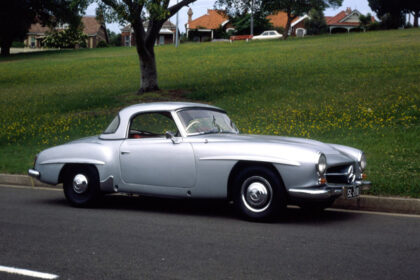
In the immediate post-World War II period Mercedes was struggling to get back on its feet. With almost three-quarters of its factories being razed it was not until 1948 that the company was able to start making cars again. Initially these were pre-WWII carry over models which continued until 1953 when the company released the 180 Ponton saloon. It was this car that formed the basis of the 190SL. The first prototype was built early in 1954 but underwent considerable reworking before the production model appeared in March of that… Read more

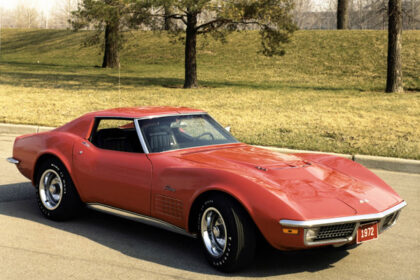
CHEVROLET CORVETTE STINGRAY

The Chevrolet Corvette has always embodied the American concept of a classic sports car. It went into production as the world’s first mass-produced plastic car in 1953 and since then has continued to prove that Chevrolets do not have to be boring. The introduction of the Corvette was seen by GM executives as a means of testing new technology. As an example, the body was to be of fibreglass as used during WWII in naval patrol boats – hence the choice of the name Corvette. By confining their testing to… Read more

AUSTIN SEVEN

With the exception of the Model T Ford, which was produced in even greater quantities, the Austin Seven probably introduced more people to motoring than any other car. Certainly, after its introduction the market for motorcycles took a dive as people found an alternative means of transport which was not only economical but much more comfortable. The fact that these cars were also amazingly long-lasting meant that through the second-hand car market many more people could enjoy motoring in an even cheaper second-hand Austin Seven. More than a quarter of… Read more

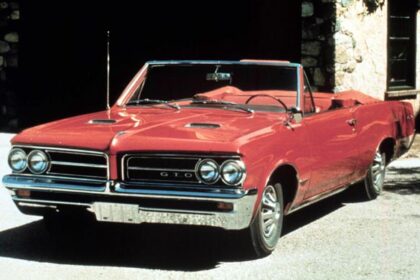
PONTIAC GTO

The US muscle car craze was started by Pontiac when John DeLorean conceived the idea of putting the largest engine that Pontiac produced, the 7.45-litre V8 used in the large Grand Prix model, into the body of the smaller compact Tempest sedan. A compact car with this much power was considered by DeLorean to be just the thing to attract the young buyer in the early 1960s since Pontiac was losing market share and their model range was perceived as most suitable for older drivers. The Pontiac GTO is renowned… Read more

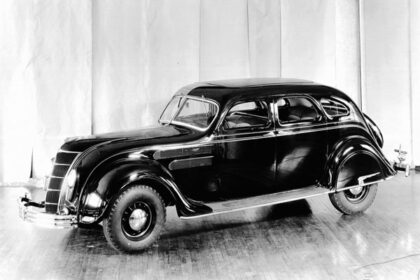
CHRYSLER AIRFLOW

After World War I the automobile soon became a dominant part of people’s lifestyles and with its increasing importance the automobile itself was undergoing rapid change. The 1930s began with flared mudguards, wide, vertical grilles and running boards but by the end of the decade, mudguards began to merge integrally into the bodies of most cars, and grilles began to narrow, while windscreens began to attain a backward slope previously only seen on sportscars. In 1934 when Chrysler introduced the Airflow it soon became known as one of the ugliest… Read more

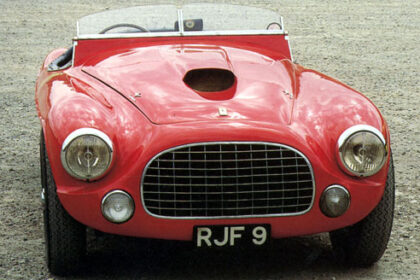
FERRARI 212 BARCHETTA

Enzo Ferrari, the son of an Italian metalworker, was born in Modena in northern Italy in 1898. Because his name has been associated with motor racing since he became a works driver for Alfa Romeo in the 1920s many people assume he has been involved in car manufacture for many years but that is not the case. Even his insignia of the prancing horse is a carryover from Scuderia Ferrari, the name of his racing team formed in 1929 to run the Alfa Romeo entries. Ferrari didn’t start his own… Read more

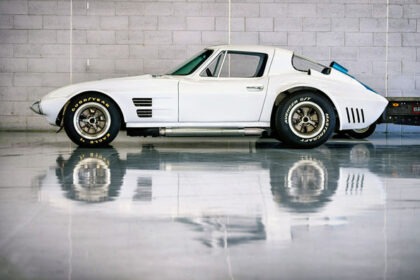
CHEVROLET CORVETTE GRAND SPORT

In 1957 Detroit’s Big Three agreed to honour a resolution by the US Automobile Manufacturers Association (AMA) which was in effect a complete ban on manufacturer’s involvement in motor sport. Over the following years both Ford and GM failed to strictly adhere to the ruling and in 1963 Ford abandoned their agreement completely whilst GM continued at least to show a token acceptance of it. However, when news of the Shelby Cobra became common knowledge at least some of the GM people became anxious to give it a run for… Read more

PEGASO Z102

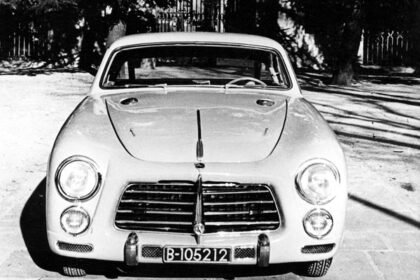
For those not around at the time, perhaps a short history lesson may help to set the scene for background to the Pegaso, a Spanish marque whose name is probably unfamiliar to many. In the early 1950s after World War II Spain was ruled by a dictator, General Franco. The country, which was desperately poor, had at the time only a very small motor vehicle industry whilst other European countries used their wartime production experience to develop automobile production, especially for export, to earn valuable currency. Franco wanted to convey… Read more

MERCEDES BENZ 190SL

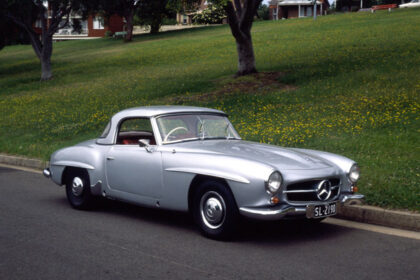
In the immediate post-World War II period Mercedes was struggling to get back on its feet. With almost three-quarters of its factories being destroyed it was not until 1948 that the company was able to start making cars again. Initially these were pre-WWII carry over models which continued until 1953 when the company released the 180 Ponton saloon. It was this car that formed the basis of the 190SL. The first prototype was built early in 1954 but underwent considerable reworking before the production model appeared in March of that… Read more